Cover letters have 7 required parts, in a specific order. Skip any of them and the letter reads as sloppy. Add anything extra and the letter reads as bloated. Recruiters spend 30 to 60 seconds reading a cover letter when they read one at all, according to ResumeGo's 2024 survey, which means every part has to earn its line. This guide breaks down exactly what should be in a cover letter, part by part, with word counts, examples, and the mistakes to avoid.
The 7 Parts of a Complete Cover Letter
Every strong cover letter has the same 7 parts in the same order. The content changes; the structure does not.
The 7-part cover letter structure
- Header (your contact info, matching your resume) — 3 lines
- Date and recipient (hiring manager name + company + address) — 4 lines
- Salutation (Dear Hiring Manager Name) — 1 line
- Opening paragraph (the role, the hook, your strongest credential) — 3 sentences
- Body paragraph(s) (the proof: one or two quantified achievements) — 5 to 8 sentences
- Closing paragraph (why this company + next step) — 3 to 4 sentences
- Sign-off (Sincerely + your name) — 2 lines
Total length: 250 to 400 words on a single page, with 3 to 4 short paragraphs. Anything longer loses the recruiter; anything shorter looks low-effort. See our cover letter length guide for the full word-count rules.
Part 1: The Header
Your cover letter header should match your resume header. Same font, same format, same contact info. Consistency signals that both documents are part of a single, considered application.
Header template
DANIELA RODRIGUEZ
Austin, TX | d.rodriguez@email.com | (512) 555-0147 | linkedin.com/in/danielarod
Do not include a street address. Do not include a photo. Do not include icons. Both ATS parsing and privacy best practices argue against all three.
Part 2: The Date and Recipient
Format the date in full ("April 10, 2026," not "4/10/26"). Below the date, include the hiring manager's name, title, company, and company address. If you cannot find the hiring manager's name, spend 5 minutes on LinkedIn before defaulting to a generic salutation. LinkedIn's 2023 hiring manager survey found that 63% of recruiters view "Dear Hiring Manager" letters as less effort than letters addressed by name.
Date and recipient template
April 10, 2026

Priya Nair
Head of Product
Acme Software, Inc.
500 Market Street, San Francisco, CA 94105
Part 3: The Salutation
Use "Dear [First Last]," not "Dear Ms." or "Dear Mr." Gendered honorifics are a guessing game in 2026 and recruiters actively flag them as dated. If you genuinely cannot find the hiring manager's name after LinkedIn, the company careers page, and a Google search, "Dear Hiring Manager," is acceptable. "To Whom It May Concern" is not.
Part 4: The Opening Paragraph (3 Sentences)
Your opening paragraph has three sentences and three jobs: name the role, hook the reader, and show your strongest matching credential. Skip "I am writing to apply for..." Every recruiter has read that opening 10,000 times.
Opening paragraph template and example
Structure:
- Sentence 1: State the role and one concrete reason this posting stands out.
- Sentence 2: Name your current title, years of experience, and domain.
- Sentence 3: Preview the single strongest proof point you will expand in the body.
"I was drawn to the Senior Product Manager role at Acme because the JD describes the exact retention challenge my team just solved at Nimbus. As a senior PM with 9 years in B2B SaaS, I have spent the last two years turning around a subscription product with a 22% annual churn rate. Today that product churns at 11% and has added $6.2M in ARR since the relaunch."
Part 5: The Body Paragraph (5 to 8 Sentences)
The body is the most important part of the letter. It expands on the single proof point you previewed in the opening. Do not list your resume in paragraph form. Pick ONE achievement that maps directly to the biggest challenge in the JD, and walk the recruiter through it: what you inherited, what you did, what happened.
Body paragraph template (the Situation-Action-Result pattern)
- Situation (1 to 2 sentences): What did you inherit? What was broken?
- Action (2 to 3 sentences): What did you specifically do? Who did you lead, what did you build, what did you change?
- Result (2 to 3 sentences): The quantified outcome, and ideally a second-order effect.
"When I joined Nimbus, the core subscription product was losing 22% of its annual revenue to churn, with most losses concentrated in the 90-day window after signup. I led a 7-person cross-functional squad (2 engineers, 2 designers, 1 researcher, 1 analyst, and me) through a 14-week rebuild of the onboarding, in-app education, and low-engagement playbook. We shipped 11 features in 2 quarters. Annual churn dropped from 22% to 11%, and the product has added $6.2M in new ARR since the relaunch. The 90-day conversion pattern also became the template for the other 3 products in our portfolio."
For longer applications (senior and exec roles), you may have 2 body paragraphs with 2 different proof points. Keep total letter length under 400 words.
Part 6: The Closing Paragraph (3 to 4 Sentences)
The closing paragraph does three things: ties your story to why this company, proposes a next step, and thanks the reader without begging. Do not use "I look forward to hearing from you." Every letter ends that way, so it reads as boilerplate.
Closing paragraph template and example
"Acme's recent launch of the new billing platform caught my attention because the retention problem you described in the announcement is the same shape as the one I solved at Nimbus. I would welcome the chance to walk through the 90-day framework in more detail and hear where it would and would not apply to your product. Thank you for considering the application."
For the complete closing paragraph playbook including tone, next-step language, and sign-off variants, see our how to end a cover letter guide.
Part 7: The Sign-Off
Use "Sincerely," "Best regards," or "Kind regards," followed by your full name. Do not use "Cheers," "Thanks," "Warmly," or "Yours truly." Four lines of white space above your typed name if you plan to e-sign.
Sign-off template
Sincerely,


Daniela Rodriguez
Target Word Count by Part
5 Common Mistakes
- Restating the resume. The cover letter should NOT summarize your career; it should deep-dive on ONE proof point.
- Leading with your needs. "I am seeking a role where I can grow..." is about you, not the employer. Lead with what you offer.
- Generic salutation when the name is findable. "Dear Hiring Manager" when the hiring manager's name is in the JD signals low effort.
- Multiple pages. Cover letters are always 1 page. No exceptions for executives. Senior roles get 1 page with 2 body paragraphs, not 2 pages.
- No quantified result. A body paragraph without a number is a story without a punchline.
Next Steps
Rewrite your current cover letter using the 7-part structure above. When you are done, run your resume through our free ATS resume checker to make sure the underlying application matches the proof point you chose for the body paragraph. For more cover letter guidance, see our articles on what is the purpose of a cover letter, how to start a cover letter, how to end a cover letter, and cover letter examples.
Related Articles

What Is the Purpose of a Cover Letter? (And When to Skip It)
A cover letter has one job: answer the 3 questions your resume cannot. Here is the real purpose, backed by recruiter dat...
Read More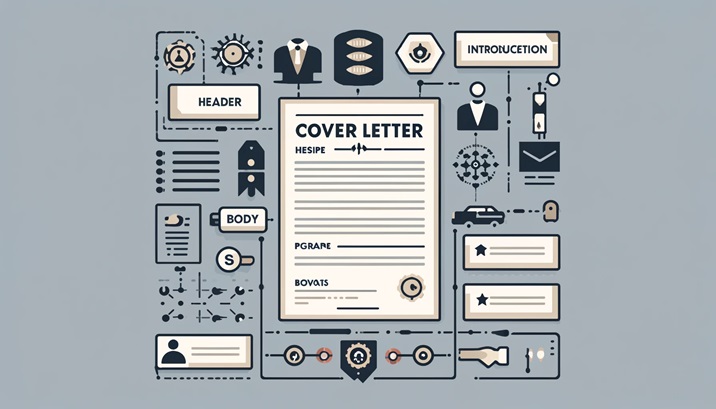
How to Start a Cover Letter: 10 Opening Lines That Beat 'To Whom It May Concern'
The first two sentences decide whether the rest of your cover letter gets read. Here are 10 opening patterns that earn t...
Read More
How to End a Cover Letter: Closing Lines That Get Responses (2026)
How to end a cover letter: the closing paragraph, the final line, and the sign-off. 20 copy-paste closings by situation ...
Read More