Google Docs is where most people start when they need a cover letter fast. It is free, works on any device, saves automatically, and produces a clean .docx or PDF export. The problem: most Google Docs cover letter templates circulating online are either too generic to impress or formatted in ways that break ATS parsers before a human ever sees them. This page gives you the template as a download you can open in Google Docs or Word, shows you exactly which formatting choices to avoid for ATS safety, and walks through before-and-after opening line rewrites so you can adapt it to any role. If you would rather not use Google Docs, our free cover letter templates are copy-and-paste letters that drop into any editor.
Get the template
Already set to one column, 1 inch margins, Georgia 11pt and contact details in the body, which is the formatting an ATS can actually read. No account with us required.
To use it in Google Docs: download the file, open Google Drive, then drag it in and open it with Google Docs. It also opens directly in Word, Pages and LibreOffice. The full template is written out further down if you prefer to paste it yourself.
Why Cover Letters Still Matter in 2026
The conventional wisdom that "nobody reads cover letters anymore" is statistically wrong. According to a 2025 Resume Genius survey of hiring managers, 83% read the majority of cover letters they receive, and 45% read the cover letter before the resume. That ordering matters: in nearly half of all applications, your cover letter is the first thing a hiring manager sees.
The stakes are real in both directions. The same survey found that 49% of hiring managers say a strong cover letter can secure an interview for a candidate who would otherwise be borderline, while 18% say a weak cover letter will eliminate an otherwise strong candidate. Cover letters are not just a formality. They are a lever.
94%
of hiring managers say cover letters influence interview decisions (Resume Genius, 2025)
72%
expect a cover letter even when the job posting says it is optional (Resume Genius, 2025)
89%
of hiring professionals expect a cover letter from applicants (Resume Genius, 2025)
35.4%
of newly hired job seekers consistently submitted cover letters throughout their search (Resume Genius, 2025)
The data also reveals a gap you can exploit: 47.4% of applicants skip the cover letter unless the employer explicitly requires one. When you submit one and your competition does not, you immediately separate yourself from nearly half the applicant pool. For a full breakdown of when cover letters are worth the time investment, see Do You Need a Cover Letter in 2026?
How to Use a Google Docs Cover Letter Template
Google Docs is one of the best free options for cover letters because it produces a clean, universally compatible .docx file when exported. With 3 billion active users (Google, 2023), virtually every hiring manager can open what you send. Here is the fastest setup path:
5 Steps to Set Up Your Cover Letter in Google Docs
- Open Google Docs at docs.google.com and sign in to your Google account. Click the blank document option or "From template gallery" if you want Google's built-in options.
- Set your page margins to 1 inch on all sides (File → Page setup). Many default templates use 0.75-inch margins, which makes the document look cramped and can cause text overflow when exported to PDF.
- Choose your font: Calibri 11pt or Georgia 11pt are the safest choices. Both render identically in Word and PDF exports, and both score highly in ATS font compatibility testing (Jobscan, 2024).
- Set line spacing to 1.15 (Format → Line & paragraph spacing). Single spacing looks compressed; 1.5 spacing wastes vertical real estate that hiring managers scan quickly.
- Copy the template below into your document and replace each bracketed placeholder with your information. Never use text boxes, headers/footers for contact information, or multi-column layouts, as all three break ATS parsers.
The Complete Cover Letter Template
The template below is structured for ATS compatibility and human readability. Every section label in brackets is a placeholder. Replace them with your actual content. The full letter should land between 250 and 400 words. Research from Zety (2025) shows that letters over 500 words see declining read rates among hiring managers. Preview a visual style below, then copy the version you like directly into Google Docs.
Every style below stays single column and ATS safe: no text boxes, no header or footer contact blocks, no columns. Only the font, header weight, accent color, and divider style change.
Complete Cover Letter Template (Copy and Paste into Google Docs)
[Your Full Name]
[City, State] • [Phone Number] • [Email Address]
[LinkedIn URL or Portfolio URL, if applicable]
[Today's Date]
[Hiring Manager's Name, or "Hiring Manager" if unknown]
[Their Title]
[Company Name]
[Company City, State, omit if unknown]
Dear [Hiring Manager's Name],
Opening Paragraph
State the specific role you are applying for and where you found it. Then lead with your strongest, most relevant credential or accomplishment. Do not open with "I am writing to apply for..." See the Before/After section below for exact language patterns.
I am applying for the [Job Title] role posted on [Source]. In my current position at [Company], I [specific achievement with numbers: metric, percentage, dollar amount, or scale] in [timeframe or context].
Body Paragraph 1
Connect one or two of your most relevant past achievements directly to a stated requirement in the job description. Use the company's own language when possible. This serves both the human reader and ATS keyword matching. Quantify every achievement.
Your job description emphasizes [specific requirement from JD]. At [Company], I [achievement that addresses this requirement], achieving [quantified result]. I [supporting credential: certification, tool proficiency, or relevant context].
Body Paragraph 2
Address why this specific company appeals to you. Reference something concrete: a product launch, a public initiative, a company value, or a market position. Generic flattery reads as filler. Specific knowledge signals genuine interest.
[Company]'s [specific initiative, product, or announcement] aligns directly with [how it connects to your background or goals]. I am particularly interested in contributing to [specific team goal or product area].
Closing Paragraph
State your interest clearly and include a specific call to action. Avoid passive closings like "I hope to hear from you." Active language signals confidence.
I would welcome the opportunity to discuss how my [relevant background] translates to this role. I am available for a call any time this week and can be reached at [phone] or [email].
Sincerely,
[Your Full Name]
Making Your Own Copy
The fastest path is the download at the top of this page, which arrives already set up the way the steps above describe. Open it in Google Docs by dragging it into Drive. However you make that first copy, keep it as a clean master and reuse Google's own file-copy workflow for every future application instead of rebuilding the letter from scratch:
- Download the template above and open it in Google Docs by dragging it into Drive, or open a blank document at docs.google.com and paste the template in.
- If you pasted it in yourself, apply the margins, font, and line spacing from the setup steps earlier in this guide, then save this version as your master copy.
- For every new application, open your master copy, click File, choose "Make a copy," and rename the copy with the company or role name.
- Edit the new copy freely. Your master template stays untouched and ready for the next application.
This keeps one clean, ATS-safe master on hand and turns every future cover letter into a short edit instead of a rebuild.
Before and After: Weak vs. Strong Opening Lines
The opening line is the highest-leverage sentence in your cover letter. Because 45% of hiring managers read the cover letter before the resume (Resume Genius, 2025), the first sentence either earns continued reading or ends the application. Here are five common weak openers and how to rewrite them:
| Before (Weak) | After (Strong) |
|---|---|
| "I am writing to express my interest in the Marketing Manager position at Acme Corp." | "The Marketing Manager role at Acme caught my attention because of your Q1 rebrand campaign, and because I spent the last four years doing exactly this work, growing content-driven pipeline from $0 to $2.3M at a B2B SaaS startup." |
| "I have always been passionate about technology and believe I would be a great fit for your team." | "After building and shipping three production APIs used by 40,000 monthly developers, I am applying for the Senior Backend Engineer role to bring that same product velocity to Acme's platform team." |
| "Please accept this letter as my application for the Registered Nurse position." | "With a CCRN certification and four years managing ICU caseloads at a 3:1 nurse-to-patient ratio, I am applying for the ICU RN position at City General to bring high-acuity care experience to your team." |
| "I am a recent graduate looking for an opportunity to grow my skills in finance." | "I am a May 2025 finance graduate who reduced month-end close time by 30% through an Excel automation project during my internship at Regional Bank, and I want to bring that same precision to the Analyst role at Acme." |
| "I was referred to this position by a colleague and am very excited about the opportunity." | "Jane Smith, your VP of Engineering, suggested I reach out about the Staff Engineer role after we collaborated on an open-source project that reduced API latency by 40% across three services." |
The pattern in every strong opening: state the role by name, immediately follow with the most relevant quantified credential you have, and make the connection between the two explicit. For full-letter examples across industries and career levels, see Cover Letter Examples.
ATS Compatibility: What to Avoid in Google Docs
Most Google Docs cover letter templates are designed to look impressive on screen, not to pass ATS parsing. ATS systems extract your text line by line and match it against job requirements. Certain formatting choices in Google Docs create parsing errors that either garble your content or drop it entirely (Jobscan, 2024).
| Formatting Element | ATS Risk | Safe Alternative |
|---|---|---|
| Text boxes (Insert → Drawing → Text box) | High Content invisible to most ATS parsers | Plain paragraph text only |
| Header/footer contact info | High Frequently skipped or duplicated by parsers | Contact info in the body, first lines of the document |
| Multi-column layouts | High Text reads left-to-right across columns, scrambling meaning | Single-column layout only |
| Decorative shapes and lines | Medium Imported as image placeholders, wastes parse budget | Plain horizontal rule or no separator |
| Icons and logos | High Images ignored entirely by all ATS | Text-only contact information |
| Non-standard fonts | Medium May not export cleanly to .docx | Calibri, Georgia, Arial, Times New Roman |
| Colored text blocks or shading | Medium Colors stripped; can reduce contrast to illegible | Black text on white background throughout |
Customizing the Template for Your Industry
The template structure above works across all industries. What changes is the emphasis in each paragraph and the specific credentials you lead with. Here are targeted customization notes for four major sectors:
Technology
- Lead with a shipped product, system, or feature, not a skill list
- Quantify with scale: users, requests per second, latency reduction, uptime percentage
- Name the tech stack only if it matches the job description exactly; irrelevant technology reads as noise
- Reference the company's public GitHub, engineering blog, or a product you use, if you can do so credibly
- Cut: "passionate about technology," "fast learner," "team player"
Healthcare
- Lead with certification (RN, CCRN, PA-C) and specialty immediately
- Quantify patient volume, nurse-to-patient ratios, or outcomes metrics (HCAHPS, readmission rates)
- Reference the specific unit type or patient population the role serves
- Mention EMR fluency (Epic, Cerner) only if listed in the job description
- Keep tone professional and precise; avoid informal language
Finance and Accounting
- Lead with credential (CPA, CFA, CMA) and relevant deal or portfolio size, or a close-cycle metric
- Reference specific software (SAP, Oracle, NetSuite) only when it matches the job description
- Use precise numbers: dollar amounts managed, error rate reduction, time-to-close improvement
- Match the formality level of the firm in your tone
- Note regulatory experience (SOX, GAAP, IFRS) when relevant to the role
Creative and Marketing
- Lead with a campaign outcome or content performance metric (CTR, follower growth, pipeline generated)
- Reference the company's actual brand voice or a recent campaign you can credibly comment on
- Link to your portfolio in the contact section, not mid-letter
- Allow more personality in tone, but ground every claim in a result
- Cut: "creative thinker," "storyteller," "passionate about brands"
Google Docs vs. Other Tools: When to Use What
Google Docs is the right choice for most job seekers, but not always the best one. Here is an honest comparison based on what matters at each stage of the application process:
| Tool | ATS Safety | Design Flexibility | Cost | Best For |
|---|---|---|---|---|
| Google Docs | High if formatted correctly | Medium | Free | Most job seekers; fast, universal, reliable |
| Microsoft Word | High | High | $9.99+/mo | Finance, law, government roles where .docx is the standard |
| Canva | Low | High | Free tier available | Print portfolios only; never ATS-submitted applications |
| Dedicated builders (Resume.io, Zety) | High | Medium | $2.95 to $29.95/mo | Paired resume plus cover letter with consistent visual formatting |
| Plain text (.txt) | Maximum | None | Free | Pasting into ATS portal text fields only |
Use Google Docs when you are applying to fewer than 20 roles or when you need a cover letter today. Use a dedicated builder when you are in an active, high-volume search and need your resume and cover letter to match visually. Never use Canva for any document that goes through an ATS: the output is image-based, not text-based, and will be invisible to parsers.
7 Cover Letter Mistakes to Avoid
These are the errors that consistently appear in rejected cover letters, based on hiring manager feedback compiled across multiple 2025 surveys:
1. Opening with "I am writing to apply"
This phrase tells the hiring manager nothing. It wastes the highest-attention moment in the document. Open with a credential or achievement instead.
2. Copying the job description back as your skills
Restating the JD reads as filler. Every point in your letter should demonstrate that you can do what the JD requires, not just confirm you read it.
3. Exceeding 400 words
Zety (2025) data shows declining read rates beyond 500 words. Most hiring managers spend 2 minutes or less on a cover letter. Write for the time they will actually give you.
4. Submitting the same letter to every company
Generic letters are detectable. A letter that references the company's product, a recent initiative, or a named contact in the organization signals genuine interest. Blanket applications signal the opposite.
5. Using AI-generated text without editing
80% of hiring managers view AI-generated cover letter content negatively, and 57% say they are less likely to hire when they detect it (Resume Genius, 2025). Use AI to research and outline. Write in your own voice.
6. No call to action in the closing
Passive closings ("I hope to hear from you") put the burden of action on the hiring manager. Close actively: "I am available for a call this week" or "I will follow up on [date]."
7. Formatting that breaks ATS parsing
Text boxes, header/footer contact info, multi-column tables, and decorative images all cause parsing failures in Google Docs exports. Single-column, plain-text formatting is the only reliable path through ATS screening.
To draft against a specific posting rather than in the abstract, our cover letter generator reads your resume and the job description together and builds the letter around what you can evidence.
Frequently Asked Questions
Related Articles

Do You Need a Cover Letter in 2026? What the Data Actually Says
Tailored cover letters lifted callbacks 53% across 7,287 applications. Here is when a cover letter is required, optional...
Read More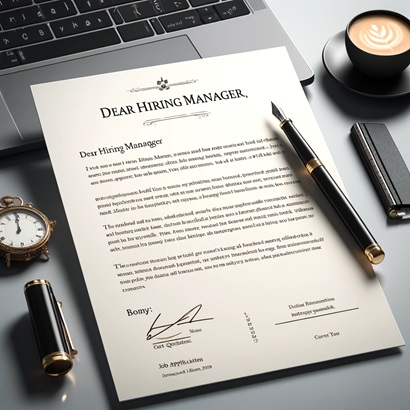
Cover Letter Examples: 4 Full Samples That Get Callbacks (2026)
Four complete, copy-paste cover letter examples for experienced, career-change, entry-level, and promotion scenarios. Ta...
Read More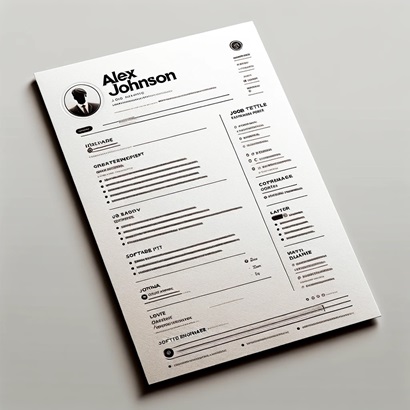
Best ATS Resume Templates 2026: 8 Free Downloads
Get 8 free ATS-friendly resume templates as single-column Word files, plus the formatting checklist each one follows. Do...
Read More