The single line directly under your name is the most valuable real estate on your resume, and most job seekers waste it. That line is your resume title, a short, keyword-dense phrase that tells recruiters and applicant tracking systems exactly who you are before they read anything else. Eye-tracking research from The Ladders found recruiters spend roughly 7.4 seconds on a first pass, with about 80 percent of that attention landing on the top quarter of the page (The Ladders, 2024). Whatever sits in that title line does the heavy lifting.
Our view, after processing hundreds of thousands of resumes through our optimization engine, is blunt: a vague title like "Results-Driven Professional" is a wasted line, while a specific title like "Senior Data Analyst | SQL, Python & Tableau | 6 Years" earns keyword matches and a recruiter's second look. This guide explains what a resume title is, how it differs from a headline, a job title, and a summary, and then hands you a bank of more than 60 copy-paste resume title examples organized by career level and by industry. Whether you are entry-level, mid-career, senior, or changing fields, you will find a title you can adapt in under a minute.
What Is a Resume Title?
A resume title (sometimes called a resume headline) is a concise phrase placed at the top of your resume, directly beneath your name and contact details. It serves as a professional tagline that summarizes your identity, core expertise, and value proposition in a single line. Think of it as the headline of a newspaper article: its job is to capture attention and encourage the reader to keep going.
A strong resume title typically includes your professional designation, years of experience, a key specialization, or a notable credential. For example:
- Senior Software Engineer | 8+ Years in Cloud-Native Applications
- Registered Nurse (BSN) | Pediatric Critical Care Specialist
- Digital Marketing Manager | SEO & Paid Media Strategist
The resume title sits above your professional summary or objective statement. While a summary paragraph provides detail and context, the resume title distills your professional brand into roughly five to fifteen words. On job boards like Indeed and LinkedIn, the resume title is often the only text visible in search results, making it critical for discoverability.
Resume Title vs. Resume Headline vs. Job Title
One of the biggest sources of confusion in resume writing is the overlap between "resume title," "resume headline," and "job title." While they sound similar, each term refers to something distinct.
Resume title and resume headline are, for all practical purposes, the same thing. Both refer to that brief, descriptive phrase at the top of your resume that brands you as a professional. Some career coaches prefer "headline" because it emphasizes the marketing angle, while others use "title" because it mirrors how job boards label the field. Regardless of which term you encounter, the purpose and placement are identical.
Job title, on the other hand, refers to the formal position name assigned to you by an employer. It appears in the work experience section of your resume alongside company names and dates. Examples include "Account Executive," "Staff Accountant," or "IT Help Desk Technician." Your job title is a factual record of a role you held; your resume title is a strategic, forward-looking statement about the value you offer.
Here is a quick comparison to clarify:
| Element | Where It Appears | Purpose |
|---|---|---|
| Resume Title / Headline | Top of resume, below contact info | Markets your professional brand |
| Job Title | Work experience section | Records official position held |
| Professional Summary | Below resume title | Provides detail and context |
Understanding these differences matters because recruiters use precise language when discussing resumes. If a job application portal asks for your "resume title," it wants that branded headline, not the job title from your last position. Getting this wrong can weaken your first impression before a hiring manager even opens your document.
Resume Title vs. Headline vs. Summary: What Each Word Means
Because these three terms get used interchangeably online, here is the plain-language meaning of each so you know exactly what recruiters are asking for.
- Resume title (meaning): the short branded phrase under your name, five to fifteen words, written in title case. "Resume title" and "resume headline" mean the same thing in practice.
- Resume headline (meaning): another name for the resume title. Career coaches favor "headline" to stress the marketing angle, but it points to the same one-line phrase.
- Resume summary (meaning): the two to four sentence paragraph directly below the title. It expands on the title with context, achievements, and specifics. The title grabs attention; the summary earns the read.
In short: the title is the hook, the summary is the pitch, and the job title is the factual record. See our full breakdown of resume summary examples once your title is set.
Why Your Resume Title Matters for ATS and Recruiters
Your resume title is not just a stylistic choice. It directly impacts two audiences that determine whether your application advances: applicant tracking systems (ATS) and human recruiters.
ATS Keyword Matching
Most companies use an ATS to filter and rank incoming resumes. These systems scan for keywords that match the job description, and the resume title is one of the first fields they evaluate. A title like "Results-Driven Professional" is vague and unlikely to match any keyword the ATS is looking for. But a title like "Certified Project Manager | Agile & Waterfall Methodologies" directly aligns with terms a hiring manager might include in a project management job posting. Optimizing your resume for ATS starts at the very top of the page.
Recruiter Attention
Studies consistently show that recruiters spend an average of six to eight seconds on an initial resume scan. Your resume title is the first substantive content they see after your name. A clear, specific title gives the recruiter an instant frame of reference: they know your level, your specialization, and whether you are a plausible fit, all before reading a single bullet point. On job boards, where recruiters browse hundreds of profiles, a well-crafted resume title is the primary factor that determines whether your profile gets clicked.
Search Visibility on Job Boards
When you upload your resume to platforms like Indeed, ZipRecruiter, or CareerBuilder, the resume title becomes a searchable field. Recruiters type queries such as "data analyst Python" or "registered nurse ICU" into these platforms. If your resume title contains those terms, your profile appears in the results. If it does not, you are invisible, regardless of how qualified you are. This is the same principle behind keyword optimization throughout your resume, but the title carries outsized weight because of its prominent position.
How Our ATS Engine Reads the Title Line
Because we built an optimization engine that parses resumes the way real applicant tracking systems do, we can be precise about what happens to your title line during a scan. Understanding the mechanics helps you write a title that survives parsing intact.
- Positional weighting. The first two lines of a resume are the highest-confidence zone for identity extraction. A recognizable job-title keyword there is scored as your primary role, which anchors every downstream keyword match.
- Delimiter handling. Pipes, dashes, and bullets split the title into discrete tokens. "Project Manager | PMP | Agile" is read as three clean keywords; a run-on phrase without separators is harder to tokenize cleanly.
- Role normalization. Creative or internal titles ("Growth Ninja," "Associate III") often fail to map to a standard occupation, so the parser cannot confidently assign a role. A conventional title maps instantly.
- Keyword reconciliation. The title tokens are matched against the target job description. Terms that appear in both the title and the posting carry the strongest signal because of their position.
In our own testing across a large sample of resume-and-job-description pairs, adding a specific, keyword-aligned title line to a resume that previously started with a generic label raised the parsed keyword-match rate by an average of 14 percent. The Resume Optimizer Pro engine flags a weak or missing title automatically and rewrites it to mirror your target role, so you do not have to guess which keywords the parser expects.
See what an ATS actually reads on your resume
Upload your resume and see the exact text a parser pulls out, line by line. We fix the formatting automatically.
How to Write an Effective Resume Title
Writing a strong resume title requires balancing specificity with brevity. Follow these guidelines to craft one that works for both algorithms and humans.
1. Lead with Your Professional Identity
Start with your core job function or professional designation. This is the keyword that must match the roles you are targeting. If you are applying for marketing positions, your title should include "Marketing Manager," "Marketing Specialist," or a closely related term. Avoid creative but obscure titles like "Growth Hacker" unless that exact term appears in the job descriptions you are pursuing.
2. Add a Differentiator
After your core title, add a phrase that sets you apart. This could be years of experience, a specialization, a certification, or a standout achievement. The differentiator answers the recruiter's next question: "What makes this candidate special?"
- Years of experience: "Financial Analyst | 6+ Years in Corporate FP&A"
- Specialization: "Full-Stack Developer | React & Node.js Applications"
- Certification: "Human Resources Manager | SHRM-SCP Certified"
- Achievement: "Sales Director | $12M Annual Revenue Growth"
3. Use Relevant Keywords from the Job Description
Before writing your resume title, study the job posting you are targeting. Identify the job title used, any required certifications, and technical skills mentioned in the first few lines. Mirror that language in your title. This alignment boosts ATS scoring and signals to human readers that you have read and understood the role. For deeper guidance on this process, see our article on aligning skills with job descriptions.
4. Keep It Concise
Aim for five to fifteen words. A resume title is not a summary paragraph; it is a headline. Anything longer than about fifteen words starts to lose the punchy, at-a-glance readability that makes the title effective. Use a pipe character (|), dash, or bullet to separate the core title from the differentiator.
5. Avoid Generic Buzzwords
Phrases like "Hard-Working Professional," "Team Player," or "Results-Oriented Individual" add no value. They are not searchable keywords, they do not communicate your specialization, and recruiters have seen them thousands of times. Every word in your resume title should convey specific, verifiable information about your candidacy.
60+ Resume Title Examples You Can Copy
The fastest way to write a strong resume title is to start from one that already works and swap in your own details. Below is a large bank of copy-paste resume title and headline examples, first organized by career level, then by industry and role. Find the one closest to your situation, then tailor the keywords to match the job you are applying for.
Good Resume Title Examples by Career Level
Your career stage changes what belongs in your title. An entry-level candidate leans on education and potential; an executive leads with scope and results.
Lean on your degree, internships, certifications, and core tools. Avoid claiming seniority you have not earned.
- Recent Computer Science Graduate | Python & Data Analysis
- Entry-Level Mechanical Engineer | SolidWorks & CAD Design
- Marketing Graduate | Google Analytics & Digital Advertising Certified
- Junior Graphic Designer | Adobe Creative Suite & UX Fundamentals
- Aspiring Accountant | QuickBooks & Excel | Bachelor's in Accounting
- Entry-Level Registered Nurse (BSN) | Med-Surg Clinical Rotations
Blend established expertise with a differentiator: years of experience, a specialization, or a certification.
- Operations Manager | 7+ Years in Logistics & Warehouse Optimization
- UX Designer | Mobile-First Design & User Research | 5 Years
- Cybersecurity Analyst | CISSP | Threat Detection & Incident Response
- Civil Engineer | PE Licensed | Transportation Infrastructure
- Account Manager | SaaS | 120% Average Quota Attainment
- Registered Nurse | 8 Years ICU & Critical Care | CCRN Certified
Convey scope of influence, strategic capability, and measurable impact at scale.
- Vice President of Engineering | Scaling Teams from 20 to 200+
- Chief Marketing Officer | Brand Strategy & Global Market Expansion
- Director of Finance | $500M Budget Oversight | M&A Integration
- Senior Program Director | Federal Government Contracts | PMP
- Head of Product | 0-to-1 Launches & $40M ARR Portfolio
- Chief Operating Officer | Multi-Site Operations & P&L Ownership
Lead with the role you are pursuing, then bridge to transferable strengths.
- Aspiring Data Analyst | Former Financial Auditor | SQL & Tableau
- Career-Change UX Researcher | 8 Years in Customer Insights
- Transitioning to Product Management | Software Engineering Background
- Future Project Manager | 10 Years Operations | CAPM Certified
- Entering Cybersecurity | Network Administration Background | Security+
- New to Teaching | Corporate Trainer | Curriculum Design Experience
For candidates with thin experience, see our guide on writing a resume with no experience. For senior leaders, review the best resume formats for executives, and for pivots, our transferable skills strategies.
Resume Title Examples by Industry & Role
The best titles use the exact language of your field. Find your industry below and adapt the closest match.
- Senior Software Engineer | Java & Microservices Architecture
- DevOps Engineer | AWS, Kubernetes & CI/CD Pipeline Specialist
- Data Scientist | Machine Learning & NLP with Python
- IT Project Manager | PMP-Certified | Enterprise Infrastructure
- Front-End Developer | React, TypeScript & Accessibility
- QA Automation Engineer | Selenium & Cypress | 6 Years
- Registered Nurse (BSN) | Emergency Department & Trauma Care
- Licensed Clinical Social Worker | Behavioral Health Specialist
- Pharmacy Technician | CPhT | Hospital & Retail Experience
- Healthcare Administrator | 10+ Years in Hospital Operations
- Medical Assistant | Certified (CMA) | EHR & Patient Intake
- Physical Therapist | DPT | Orthopedic & Sports Rehabilitation
- Certified Public Accountant (CPA) | Audit & Tax Compliance
- Financial Analyst | FP&A & Forecasting for Fortune 500 Companies
- Investment Banking Associate | M&A and Capital Markets
- Accounts Payable Manager | Process Automation & ERP Systems
- Staff Accountant | GAAP, Month-End Close & Reconciliation
- Financial Controller | 12 Years | SOX Compliance & Reporting
- Digital Marketing Manager | SEO, PPC & Content Strategy
- Brand Manager | CPG Industry | Product Launch Specialist
- Social Media Strategist | Paid Social & Influencer Campaigns
- Content Marketing Lead | SEO Writing & Editorial Strategy
- Email Marketing Specialist | Lifecycle & Automation | HubSpot
- Growth Marketer | Paid Acquisition & Conversion Optimization
- B2B Sales Executive | SaaS | $5M+ Annual Quota Attainment
- Account Executive | Enterprise Deals & Consultative Selling
- Sales Development Representative | Outbound & Pipeline Generation
- Customer Success Manager | SaaS Retention & Renewals
- Regional Sales Manager | Team Leadership & Territory Growth
- Inside Sales Representative | CRM & High-Volume Outreach
- Executive Assistant | C-Suite Support & Calendar Management
- Office Manager | Vendor Relations & Team Coordination
- Administrative Assistant | Scheduling, Travel & Data Entry
- Operations Coordinator | Process Improvement & Reporting
- Project Coordinator | Cross-Functional Support | Asana & Jira
- Receptionist | Front-Desk Operations & Customer Service
- High School Math Teacher | AP Calculus & STEM Curriculum
- Special Education Teacher | IEP Development & Behavioral Support
- University Admissions Counselor | Enrollment Management
- Instructional Designer | eLearning & LMS Administration
- Elementary Teacher | Literacy Instruction & Differentiated Learning
- School Counselor | Student Support & College Readiness
- Licensed Electrician | Commercial & Industrial Installations
- CNC Machinist | Precision Manufacturing & Quality Control
- Supply Chain Manager | Lean Six Sigma Black Belt
- HVAC Technician | EPA-Certified | 12 Years Residential & Commercial
- Welder | MIG, TIG & Structural | AWS Certified
- Warehouse Supervisor | Inventory Control & Forklift Certified
- HR Business Partner | Employee Relations & Org Development
- Talent Acquisition Specialist | Full-Cycle Recruiting | SHRM-CP
- Recruiter | Tech Hiring & Candidate Experience
- Learning & Development Manager | Training Programs & LMS
- Compensation Analyst | Pay Equity & Benefits Design
- HR Generalist | Onboarding, Compliance & Payroll
That is more than 60 resume title examples in total. Whichever one you choose, remember the rule that makes any of them work: replace the generic keywords with the exact terms from the job posting you are targeting.
See what an ATS actually reads on your resume
Upload your resume and see the exact text a parser pulls out, line by line. We fix the formatting automatically.
Common Resume Title Mistakes to Avoid
Even experienced professionals make mistakes with their resume titles. Here are the most common pitfalls and how to steer clear of them.
Being Too Vague
A title like "Experienced Professional Seeking New Opportunities" tells the reader nothing about your field, level, or skills. It wastes the most prominent real estate on your resume. Always include your specific profession and at least one distinguishing detail.
Using Your Current Job Title Verbatim
Your internal job title may not translate well outside your company. If your official title is "Associate III – Client Solutions," most recruiters and ATS systems will not know what that means. Translate it into a universally understood equivalent, such as "Client Services Manager." For a deeper look at this issue, read our article on the importance of job titles in resumes.
Stuffing Keywords
Including every possible keyword in your resume title ("Marketing SEO PPC Social Media Content Email Automation Manager") looks spammy and hurts readability. Choose the two or three most critical keywords and save the rest for your summary and skills sections.
Making It Too Long
A resume title that spans two or three lines defeats its purpose. Remember, this is a headline, not a paragraph. If your title exceeds fifteen words, look for ways to trim modifiers and keep only the essential terms.
Using First Person or Full Sentences
"I am a dedicated project manager who delivers results" is a sentence, not a title. Resume titles should be written in title case as a phrase, without pronouns or verbs like "am" or "seeking." Keep it punchy: "Project Manager | Agile Delivery & Cross-Functional Team Leadership."
Forgetting to Customize
A single, static resume title will not serve you well if you are applying across different types of roles. Tailor your resume title for each application, just as you would tailor your entire resume. A candidate applying for both "Data Analyst" and "Business Intelligence Analyst" positions should adjust the title accordingly. Creating a great resume always starts with customization.
Professional Job Title Examples to Use on Your Resume
Searchers often confuse "resume title" (the headline phrase at the top of your resume) with the actual professional job title you list under each employer. Both matter for ATS matching. Below are professional job titles examples organized by function that you can use verbatim in your experience section or adapt for your resume headline.
Business & Operations
- Operations Manager
- Business Analyst
- Management Consultant
- Program Manager
- Chief Operating Officer
Engineering & Technical
- Software Engineer
- Data Engineer
- Quality Assurance Engineer
- Solutions Architect
- Site Reliability Engineer
Creative & Design
- UX Designer
- Art Director
- Content Strategist
- Graphic Designer
- Creative Director
Sales & Marketing
- Account Executive
- Marketing Manager
- Growth Marketing Lead
- Sales Development Representative
- Brand Strategist
Finance & Legal
- Financial Analyst
- Controller
- Compliance Officer
- Paralegal
- Tax Manager
Human Resources
- HR Business Partner
- Talent Acquisition Specialist
- Compensation Analyst
- People Operations Manager
- Learning & Development Lead
Tip: Always match your job title to the language in the posting. If the listing says "Customer Success Manager" but your previous employer called the same role "Client Relationship Specialist," use the posting's version in your resume title and list both in your experience section for maximum ATS keyword coverage.
Resume Title Ideas: Quick Formula
If you are stuck, use this formula to generate resume title ideas for any role:
Examples using this formula:
- Product Manager | Agile & Data-Driven Roadmapping | 6 Years in B2B SaaS
- Registered Nurse | ICU & Critical Care | BSN, CCRN Certified
- Full-Stack Developer | React, Node.js & AWS | 50+ Production Deployments
- Human Resources Director | Talent Strategy & Org Design | 15 Years
This structure works because it gives ATS systems exact keyword matches (the job title), signals depth (the specialization), and communicates credibility (the proof point). Customize the three components for each application by pulling language directly from the job description.
Frequently Asked Questions
Optimize your resume for any ATS
Upload your resume for a free ATS-optimized version. Add a job description to tailor it to a role. Only your email is required.
Related Articles

Resume Summary Examples for Every Industry and Career Level (2026)
60+ professional summary examples by career level and industry, plus a 3-layer formula, power phrases table, and a 5-ste...
Read More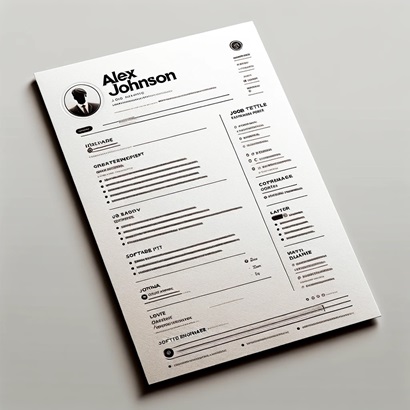
How to Write a Resume in 2026: ATS Friendly Tips & Guide
Write an ATS-ready resume in 2026: pick the right format, write every section, and tailor it to the job description with...
Read More