What Is an ATS? A Simple Definition
An applicant tracking system (ATS) is software that employers use to manage every stage of the hiring process, from collecting resumes to tracking candidates through interviews and offers. Think of it as a digital gatekeeper that sits between your job application and the hiring manager’s desk.
When you submit a resume through a company’s careers page, a job board like Indeed or LinkedIn, or even via email, that resume almost always lands in an ATS first. The software stores your application, extracts information from your resume, and helps recruiters search, filter, and rank candidates based on how well they match the job requirements.
Popular applicant tracking systems include Workday, Greenhouse, Lever, iCIMS, Taleo (Oracle), and BambooHR. While each platform differs in features and interface, they all share the same core purpose: helping employers process large volumes of applications efficiently.
Here is the key takeaway: over 97% of Fortune 500 companies and roughly 75% of all employers use some form of ATS. If you are applying for jobs online, your resume is almost certainly being screened by one of these systems before a human ever sees it.
How Does an Applicant Tracking System Work?
Understanding how ATS software works gives you a significant advantage in the job search. The process follows several distinct stages, each of which affects whether your application moves forward or gets filtered out.
1. Resume Parsing
The moment you upload your resume, the ATS parses (reads and extracts) the content. Parsing means the software breaks your resume down into structured data fields: your name, contact information, work history, education, skills, and certifications. It converts your carefully formatted document into a database record.
This is where formatting matters enormously. If your resume uses complex tables, text boxes, headers and footers, or unusual fonts, the parser may misread or skip entire sections. A beautifully designed resume that a human would love can become garbled data in an ATS. For more on how parsing works under the hood, see our guide on what is resume parsing.
2. Keyword Matching and Scoring
After parsing, the ATS compares the extracted content against the job description. It looks for specific applicant tracking system keywords: skills, qualifications, job titles, certifications, and tools mentioned in the posting. The system scores each resume based on how closely it matches the requirements.
Some systems use simple keyword matching (does the resume contain “project management”?), while more advanced platforms use semantic matching that can recognize related terms (understanding that “PM” and “project manager” refer to the same thing). However, you should never assume an ATS is smart enough to infer meaning. Being explicit with your keywords is always the safer approach. Learn more in our resume keywords guide.
3. Ranking and Filtering
Based on keyword matches, qualifications, and other criteria the recruiter has configured, the ATS ranks all applicants. Recruiters can then sort candidates by match score, filter by specific requirements (such as years of experience or a required certification), and quickly identify the most promising applications.
In practice, a recruiter reviewing 300 applications for a single position may only look at the top 20 or 30 ranked candidates. If your resume scores low because it is missing key terms or is poorly formatted, it may never be seen by a person, regardless of how qualified you actually are. For a detailed walkthrough of exactly what happens inside these scanners, see our guide on how ATS resume scanners work.
4. Candidate Tracking
Beyond initial screening, the ATS continues to manage your application throughout the hiring pipeline. It tracks which stage you are in (applied, phone screen, interview, offer), stores notes from interviewers, schedules communications, and maintains compliance records. This is the “tracking” part of applicant tracking system, and it is why the software is valuable to employers far beyond resume screening.
Why Do Employers Use ATS Software?
You might wonder why companies rely on automated systems instead of having humans read every resume. The reasons are practical and, once you understand them, completely logical.
Managing High Application Volume
A single job posting on a major job board can attract hundreds or even thousands of applications. A mid-size company with 50 open positions at any given time could be dealing with tens of thousands of resumes per month. Without an ATS, managing that volume manually would require an army of recruiters and weeks of review time. The ATS makes it possible for a small HR team to handle enormous application flow.
Improving Hiring Efficiency
Time-to-hire is a critical metric for employers. Every day a position goes unfilled costs the company money in lost productivity. An ATS dramatically reduces the time recruiters spend on administrative tasks: sorting resumes, sending acknowledgment emails, scheduling interviews, and tracking candidate status. This lets recruiters focus their energy on evaluating the most qualified candidates rather than processing paperwork.
Ensuring Compliance and Consistency
Employment law requires companies to maintain records of all applicants for federal reporting (such as EEOC compliance in the United States). An ATS automatically stores every application, documents the reasons candidates were advanced or rejected, and generates compliance reports. This protects employers from legal liability and ensures a consistent, auditable hiring process.
Enabling Collaboration
Modern hiring involves multiple stakeholders: recruiters, hiring managers, team leads, and sometimes entire interview panels. An ATS provides a centralized platform where everyone involved can review candidates, leave feedback, and coordinate decisions without relying on email chains or spreadsheets.
How ATS Affects Your Job Application
Now that you understand what an ATS is and why employers use it, let us look at the direct impact on you as a job seeker. This is where the stakes become very real.
Research consistently shows that up to 75% of resumes are rejected by ATS before a human recruiter ever reviews them. That is not because three-quarters of applicants are unqualified. It is because their resumes are not formatted or written in a way that the software can accurately read and score.
Common reasons your resume might fail an ATS screening include:
- Incompatible formatting: graphics, columns, text boxes, and headers/footers that the parser cannot read
- Missing keywords: failing to include the specific terms and phrases from the job description
- Wrong file type: submitting a format the system cannot parse correctly (some systems struggle with PDFs)
- Non-standard section headings: using creative headers like “My Journey” instead of “Work Experience”
- Abbreviations without context: using only abbreviations (like “CPA”) without ever spelling out the full term (“Certified Public Accountant”)
The good news is that once you understand these pitfalls, optimizing your resume for ATS is straightforward. An ATS-optimized resume is not a lesser version of your resume. It is actually a clearer, more targeted, and more effective document that works well for both software and human readers.
How to Optimize Your Resume for ATS
Creating an ATS-friendly resume does not mean stripping away all personality or design. It means being strategic about structure, formatting, and content. Here are the most effective steps you can take. For a deeper dive, see our comprehensive guide on how to optimize your resume for ATS.
Use a Clean, Simple Format
Stick to a single-column layout with standard section headings. Avoid tables, text boxes, graphics, images, and multi-column designs. Use standard fonts like Arial, Calibri, or Times New Roman. Your resume does not need to look plain. It just needs to use formatting that ATS parsers can reliably read. Check out our best ATS-friendly resume templates for 2026 for designs that look professional while remaining fully parsable.
Mirror the Job Description Keywords
Read the job posting carefully and identify the key skills, qualifications, tools, and requirements mentioned. Then make sure those exact terms appear naturally throughout your resume. If the posting asks for “project management” experience, use that exact phrase. Do not substitute “managing projects” and hope the ATS makes the connection.
This does not mean keyword stuffing. It means thoughtfully aligning your resume language with the language the employer uses. Every keyword should appear in a genuine context that accurately describes your experience. Our resume keywords guide walks through this process in detail.
Use Standard Section Headings
ATS software is trained to look for conventional section labels. Use headings like:
- Work Experience (or Professional Experience)
- Education
- Skills
- Certifications
- Summary (or Professional Summary)
Avoid creative alternatives like “Where I’ve Made an Impact” or “My Toolbox.” The system may not know how to categorize content under non-standard headings.
Submit the Right File Format
When given a choice, submit your resume as a .docx file unless the employer specifically requests PDF. While many modern ATS platforms handle PDFs well, .docx remains the most universally compatible format. If you are unsure, our article on why PDF can cause ATS issues explains the technical reasons.
Include Both Acronyms and Full Terms
The first time you mention a certification, tool, or technical term, spell it out fully and include the abbreviation. For example: “Certified Information Systems Security Professional (CISSP).” This ensures the ATS catches the match whether the recruiter searches for the abbreviation or the full name.
Tailor Your Resume for Every Application
A generic, one-size-fits-all resume will almost always score lower than one tailored to the specific job. Take the time to adjust your skills section, professional summary, and experience bullet points to reflect the priorities of each position. This is the single most impactful thing you can do for your ATS score. Learn how with our guide on how to tailor resumes for specific jobs.
Test Your Resume Before Submitting
Do not guess whether your resume is ATS-compatible. Test it. Use a tool like our free resume score checker to upload your resume against a job description and see exactly how it scores. You will get a detailed breakdown of matched and missing keywords, formatting issues, and specific recommendations for improvement. For a full walkthrough of how scoring works, see our ATS resume score guide.
Common ATS Myths Debunked
There is a lot of misinformation about applicant tracking systems floating around on social media and career forums. Let us separate fact from fiction.
Myth: ATS Automatically Rejects Candidates
Reality: Most ATS platforms do not reject anyone on their own. They rank and organize applicants, but a human recruiter makes the decision about who to move forward. However, if your resume ranks at the bottom due to poor keyword alignment or formatting problems, the recruiter may never scroll down far enough to see it, which has the same practical effect as a rejection.
Myth: You Need to Hide Keywords in White Text
Reality: This is terrible advice that was outdated years ago. Modern ATS platforms can detect hidden text, and recruiters consider it deceptive. If discovered, it will disqualify your application immediately. Always include keywords visibly and in context.
Myth: ATS Cannot Read PDFs
Reality: Most modern ATS platforms can parse PDFs, especially text-based ones. However, PDFs created from images (such as scanned documents) or those with heavy graphic design elements can still cause parsing issues. When in doubt, .docx is the safest choice, but a cleanly formatted PDF will work with the vast majority of systems.
Myth: Creative Resumes Are Always Penalized
Reality: Moderate design elements like color accents, professional fonts, and subtle formatting are generally fine. The problems arise with complex layouts that break the parser: multi-column designs, infographics, icons used in place of text, and content stored in image files. You can have a visually appealing resume that is also ATS-friendly; it just requires choosing the right design elements.
Myth: Applying Multiple Times Helps Your Chances
Reality: An ATS tracks every application you submit. Applying to the same job repeatedly or applying to every open position at a company does not improve your odds and can actually flag your profile negatively. Focus on quality over quantity: tailor one strong application for each role that genuinely matches your background.
Frequently Asked Questions
Optimize your resume for any ATS
Upload your resume for a free ATS-optimized version. Add a job description to tailor it to a role. Only your email is required.
Related Articles

How to Optimize Your Resume for ATS: The 12-Move Checklist Ranked by Point-Lift (2026)
The 12 ATS resume fixes ranked by typical engine point-lift. Single-column +12-18, standard headings +7-11, JD keywords ...
Read More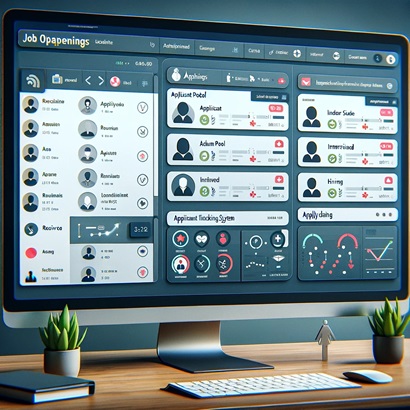
ATS Score Explained: How Resume Scores Are Calculated
What an ATS score actually measures, how the weighting works, and why the same resume scores differently on every tool. ...
Read More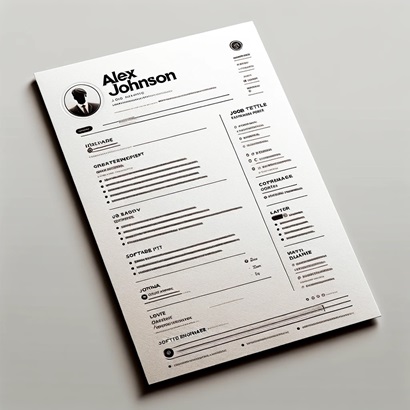
Best ATS Resume Templates 2026: 8 Free Downloads
Get 8 free ATS-friendly resume templates as single-column Word files, plus the formatting checklist each one follows. Do...
Read More