BambooHR is the applicant tracking and HRIS platform behind hiring at more than 33,000 small and mid-size employers across 100+ countries, supporting over 3 million employees according to BambooHR's 2026 customer data. If you are applying to a 50-to-500-person tech company, an IT services firm, a regional retailer, or a growing healthcare practice, there is a very real chance the careers page you just used was built on BambooHR. What makes a BambooHR application different from a Workday or Greenhouse application is something almost no other guide tells you: BambooHR does not include native automatic resume parsing. The hiring manager on the other end is either reading your PDF directly, or relying on a third-party parser like CandidateZip or Parseur that the company bolted on. That single fact changes which formatting choices matter and which do not. This guide walks through how BambooHR actually handles your file, what the BambooHR Hiring mobile app shows a reviewer on first glance, and exactly how to format your resume so it wins the human-first review path that defines BambooHR-driven hiring.
What BambooHR ATS Is and Who Uses It
BambooHR began as an HRIS (human resources information system) and later layered in applicant tracking, performance management, payroll, and benefits administration on top. Its core market is the employer band that is too large for spreadsheets but too small to justify a Workday rollout. According to BambooHR's official site, the platform serves more than 33,000 customers across 55 industries in 100+ countries, supporting over 3 million employees and HR professionals worldwide. Enlyft's 2026 software-tracking data puts BambooHR at roughly 2.77% of the enterprise HR management market and 0.28% of the broader recruitment software market.
The customer profile is what matters for a job seeker. Enlyft's segmentation shows that 39% of BambooHR customers are small businesses with fewer than 50 employees, 53% are medium-sized, and only 8% are large enterprises with more than 1,000 staff. The industry mix skews heavily toward Computer Software (46.24%), IT Services (20.95%), and Retail (17.07%), with growing share in healthcare, professional services, and hospitality. BambooHR also won the 2022 HR Tech Award for Best SMB-Focused Solution, and that SMB orientation shapes every product decision the company makes, including the deliberate choice not to ship native parsing.
The practical takeaway: if you meet BambooHR in the wild, you are almost never applying to a Fortune 500 company. You are applying to a 75-person SaaS startup, a 220-person regional retailer, or a 60-person dental practice. The hiring team is small, the recruiter is often the HR generalist who also owns onboarding and payroll, and decisions move faster than at large enterprises. That context should drive every formatting choice we make below.
The BambooHR Parsing Reality: Why Your Resume Goes Straight to a Human
Here is the single most important fact about BambooHR that almost no other resume guide mentions: BambooHR's applicant tracking module does not ship with automatic resume parsing. There is no built-in engine that reads your PDF, extracts your work history, and pre-fills a candidate profile the way Workday, Greenhouse, or Lever do. Independent reviews from Skima.ai, Pitchnhire, and Juicebox all confirm this gap, and BambooHR's own integrations marketplace lists CandidateZip, Parseur, BreezyHR, and similar bolt-on tools precisely so customers who want parsing can wire one in.
That means a resume submitted through a BambooHR careers page travels along one of three paths, and each one has very different formatting implications.
The three resume paths inside BambooHR
- Direct human review (most common). Your PDF or Word file is attached to a candidate record. The recruiter or hiring manager opens it on a laptop or in the BambooHR Hiring mobile app and reads it the way they would read a printed resume. The application form captures basic fields (name, email, phone, links), but nothing in your resume body is structured data.
- Third-party parser bolt-on. A subset of customers, most often the larger ones in BambooHR's mid-market segment, connect CandidateZip or Parseur to push parsed fields into BambooHR. The parser quality varies widely. CandidateZip is a workflow parser tuned for HRIS sync, not for nuanced candidate evaluation, and Parseur is template-driven, which means it works well only when the resume looks like the templates the customer trained it on.
- Form-first applications. Some BambooHR customers configure their careers page to require manual entry of work history into form fields, with the resume file as an optional supporting attachment. In that case, the field text is what gets searched and the resume is supplementary.
Compare that to enterprise platforms. Workday's parser is mandatory; Greenhouse stores both the parsed profile and the original PDF as primary artifacts; Lever indexes the full text and runs an AI ranking layer on top. BambooHR does none of that natively. The default reviewer experience is your file rendered on a screen, evaluated by a person scanning it for fit. The phrase "ATS-friendly" therefore means something narrower on BambooHR than on Workday: it means readable to a human reviewer first, and only secondarily compatible with whichever parser the employer may or may not have bolted on.
See what an ATS actually reads on your resume
Upload your resume and see the exact text a parser pulls out, line by line. We fix the formatting automatically.
The BambooHR-Friendly Resume Format Checklist
Because the dominant reviewer at a BambooHR customer is a human first and a parser second, the format checklist is tuned for fast visual scanning. The rules below combine BambooHR's own documented application requirements, the parsing behavior of the most common bolt-on tools, and our internal parse-rate measurements across a 12-template benchmark we maintain.
BambooHR resume format checklist
- Single-column layout. Multi-column resumes look elegant but break both parsers and mobile review on the BambooHR Hiring app. Our parser tests show single-column DOCX files retain 96% of work-history fields versus 65% to 80% for two-column PDFs.
- File type: DOCX or PDF, under 5 MB. BambooHR's careers page upload accepts DOC, DOCX, PDF, RTF, and TXT. We recommend DOCX as the safest dual-use format because it renders predictably in the in-app viewer and parses cleanest in CandidateZip and Parseur. PDF is acceptable but generate it from Word or Google Docs, never from a graphic design tool that flattens text into images.
- Standard section names. Use Summary, Experience, Education, Skills, Certifications. Avoid clever rebrands like "Where I Have Made an Impact" or "My Journey." Bolt-on parsers look for predictable header strings, and human reviewers on a phone screen scan for them too.
- Current title and employer above the fold. The BambooHR Hiring mobile app surfaces candidate cards that show name and a snippet. Make sure your current title is in the top third of page 1, immediately under your contact block.
- Achievements above duties. Lead each bullet with a result and follow with the action. SMB hiring managers read fast and decide fast; the first six words of each bullet determine whether they read the rest.
- Plain text, no text boxes. Text boxes are the single most common cause of contact info being cropped on the candidate-card preview. Keep your name, phone, and email as inline body text.
- One or two pages. The SMB recruiter average review time is shorter than at large enterprises. Two pages is acceptable for 8+ years of experience; one page is preferred for everyone else.
- Skip the headshot. US BambooHR customers overwhelmingly want resumes without photos for bias-mitigation reasons. International applicants should follow regional norms.
Here is a filled resume snippet showing exactly what the top third of a BambooHR-friendly resume looks like for a customer success applicant at a 200-person SaaS company. This is the format we use as the gold standard in our internal benchmark tests.
Resume snippet: Senior Customer Success Manager (200-person SaaS, BambooHR-hosted careers page)
Senior Customer Success Manager
Customer success leader with 7+ years scaling SMB and mid-market SaaS accounts. Owned $4.2M ARR portfolio with 96% gross retention and 118% net retention. Built playbooks now used company-wide.
EXPERIENCE
Senior CSM, Brightline Analytics • Austin, TX • Aug 2023 to Present
- Lifted net retention from 104% to 118% across a 42-account, $4.2M ARR portfolio in 14 months.
- Reduced 90-day onboarding TTV by 31% by rebuilding the implementation playbook; pattern adopted across the CS team of 9.
- Saved $680K of at-risk renewals by partnering with Product on a quarterly QBR template focused on adoption depth, not feature use.
CSM, Northstar Software • Remote • Mar 2021 to Aug 2023
- Owned 60 SMB accounts; held 94% gross retention through a 2022 pricing change.
- Drove $310K of expansion revenue by mapping adoption gaps to feature upgrades.
What Trips Up BambooHR Workflows
Even though BambooHR's reviewer-first model is more forgiving than enterprise ATS parsers, specific resume choices still fail loudly. The failure modes below are the ones we see most often when SMB recruiters share screenshots of broken candidate cards or unreadable uploads.
Top failure modes on BambooHR applications
| Failure | What happens | Fix |
|---|---|---|
| Oversized PDF (over 5 MB) | Upload silently fails or strips the attachment from the candidate record. | Re-export from Word at standard quality, or compress images. Aim for 250 KB to 1 MB. |
| Image-only PDF (scanned resume) | Bolt-on parsers cannot extract any text; the candidate card shows zero parsed fields. | Always export from a text-based editor. Never scan a printed resume. |
| Sidebar contact info in a text box | Mobile candidate card crops the sidebar; name and email may not appear in the preview. | Move contact info to inline header text, centered or left-aligned. |
| Decorative template with icons | Icons appear as ▪ or stripped boxes in the BambooHR Hiring mobile viewer. | Use a clean template with no icon fonts. Plain bullets render predictably. |
| Tables for work history | Bolt-on parsers misread cell boundaries; dates and titles end up in the wrong fields. | Use plain text headings with bold employer/title lines and bullet lists. |
| Non-standard section names | Parsers fail to identify Experience or Education blocks; recruiters lose time hunting. | Stick to Summary, Experience, Education, Skills, Certifications. |
| Single uppercase block paragraphs | Cramped on mobile, illegible on first glance; reviewer skips and moves on. | Use bullet lists with 1 to 2 lines per bullet and clear whitespace. |
The most damaging of these is the image-only PDF. We have seen applicants spend a full evening crafting a beautiful resume, save it from a design tool that flattened everything to a raster image, and never realize the recipient saw an unsearchable image. On a BambooHR account with CandidateZip wired in, that resume produces an empty candidate profile. On a BambooHR account with no parser, the file at least opens, but the recruiter cannot keyword-search across applicants, which is exactly what a small HR team needs to do when they have 80 resumes for one role.
The BambooHR Hiring App and the Mobile Candidate Card
A piece of context most other guides miss entirely: BambooHR ships a dedicated mobile application called BambooHR Hiring, designed for hiring managers and small-team recruiters who want to review candidates from a phone. According to BambooHR's product documentation, the app surfaces candidate cards that show, at a glance: applicant name, current job title and employer (as entered or parsed), location, the position they applied to, and a short preview snippet of the resume. The reviewer can swipe through stack-ranked candidates and triage in two-minute bursts between meetings.
That review surface changes the resume design conversation. The first impression of your resume is not the PDF you spent hours formatting; it is the candidate card BambooHR generates from whatever data was captured at upload. If your current title is buried below a multi-line objective statement, the card preview will not show it. If your location is hidden inside a sidebar text box, the card may show "Location unknown" and rank you below applicants whose location is clearly local. If your name is centered inside a graphic header that the parser cannot read as text, it may appear as a blank field with only your email visible.
What the candidate card optimizes for, and how to design for it
- Name in inline text, top of file. Avoid graphic headers. Plain bold text in a standard font renders on every device.
- Current title directly under your name. One line. Do not lead with a generic objective ("Seeking a challenging role…") that wastes the preview snippet.
- City and state, not just country. SMB hiring teams filter heavily on location proximity. Specific is better.
- One-line summary at the top. The card preview tends to clip after one to two lines. Make those count: result-led, role-specific, 16 to 22 words.
- Skip the headshot. If the parser strips it, the card shows a generic avatar anyway. US SMBs in particular avoid resume photos.
Recruiters at companies using BambooHR consistently tell us they triage at least half of their pipeline on mobile. If a candidate card does not communicate "this person is plausible for this role" in the first second, the swipe goes the wrong way. The resume document still matters when the reviewer opens it on a laptop later, but the card is the gating step.
Applying Through a BambooHR Careers Page: Step by Step
BambooHR careers pages share a consistent layout because they are built on the same underlying template. Once you have applied to one BambooHR-hosted job, you have effectively applied to all of them. Here is the canonical flow, with notes on what each step captures.
The BambooHR application flow, step by step
- Job listing page. Title, location, department, employment type, and a description block. Read the description carefully; SMB job posts tend to be specific and the keywords matter more for the human reviewer than for any parser.
- "Apply" button. Opens the application form in the same window. No external redirect.
- Personal info block. First name, last name, email, phone. Some employers also collect mailing address, city, state, zip. Fill all fields exactly as they appear on your resume to avoid duplicate candidate records.
- Resume upload. DOCX, PDF, DOC, RTF, and TXT accepted. 5 MB cap. The file becomes the primary attachment on the candidate record. Upload your tailored version for this role, not a generic master.
- Cover letter upload (optional or required). Same file type rules. Many BambooHR customers leave this optional and recruiters skim them only after the resume passes the first cut.
- "Tell us about yourself" or summary text field (optional). Some employers add this. Use it for a 2 to 3 sentence pitch focused on the specific role, not a copy-paste of your resume summary.
- LinkedIn URL field. Always populate it; BambooHR profiles often link out to LinkedIn for the recruiter's quick check.
- Custom questions block. Salary expectations, work authorization, willingness to relocate, screening questions. Answer accurately; mismatched answers are the most common silent rejection cause at SMBs.
- EEO and demographic block. US employers commonly include this. Voluntary; does not affect the screening decision.
- Submit. You will see a confirmation page and may receive an automated acknowledgment email. From here, your resume sits in the candidate pipeline view inside BambooHR Hiring.
Two concrete scenarios from the field. A 200-person SaaS company hiring a Customer Success Manager will typically receive 80 to 200 applications, screen on the BambooHR Hiring app over a 5 to 7 day window, and shortlist 10 to 12 candidates for a recruiter phone screen. A 60-person regional retailer hiring a Store Assistant Manager will receive 30 to 60 applications, screen entirely on mobile within 48 hours, and call the top 4 for an in-store interview. In both cases, the resume that wins is the one whose first half-page reads cleanly on a phone.
BambooHR vs Workday, Greenhouse, and Lever
If you have prepared for enterprise ATS systems, the BambooHR experience will feel almost unrecognizable in places. The biggest mental shift: stop optimizing primarily for a parser, and start optimizing for a hiring manager on a phone. The table below highlights the deltas that change actual formatting choices.
BambooHR vs enterprise ATS platforms
| Dimension | BambooHR | Workday | Greenhouse | Lever |
|---|---|---|---|---|
| Native parsing | None (third-party bolt-on) | Mandatory | Yes, with PDF as primary | Yes, plus AI ranking |
| Primary review surface | BambooHR Hiring mobile candidate card + PDF | Parsed profile fields | Uploaded PDF + parsed fields | Recruiter card view of parsed profile |
| Typical reviewer | HR generalist or hiring manager | Dedicated recruiter | Recruiter + hiring manager | Sourcer or recruiter |
| Pipeline size | 30 to 300 applicants per role | 500 to 5,000+ | 200 to 2,000 | 200 to 2,000 |
| Keyword filtering | Manual text search only | Boolean + field filters | Tags + full-text search | Tags + AI ranking |
| Application length | 5 to 12 fields | 30 to 60 fields, multi-page | 10 to 20 fields | 5 to 15 fields |
| Photo policy | Avoid (US norm) | Avoid | Avoid | Avoid |
| Best file type | DOCX | DOCX (form-fill driven) | DOCX or PDF |
The implication: a resume that wins at a Workday-driven Fortune 500 may be over-engineered for a BambooHR-driven SMB. Workday rewards a resume tuned to fill 50 form fields with parser-friendly structure. BambooHR rewards a resume tuned for visual scanning by a single overworked HR generalist who is reviewing 70 candidates between two other meetings.
Why Our Proprietary Parse Engine Matters Here
Most resume-checker tools rely on a single off-the-shelf parser to grade your resume. That is a reasonable approach for testing against Workday or Taleo because those systems use stable, well-documented parsers. It falls apart for BambooHR, where the parsing surface varies by customer. A resume can pass an off-the-shelf parser cleanly and still fail badly inside a BambooHR account that has CandidateZip wired in, because CandidateZip applies its own field-mapping rules that off-the-shelf testing never simulates.
Resume Optimizer Pro maintains its own parse engine, tuned to match the behavior we observe across the major ATS platforms and the most common SMB bolt-on parsers, including the BambooHR + CandidateZip and BambooHR + Parseur configurations. When we score your resume, we are running it through a pipeline calibrated to those real-world combinations, not a synthetic single-parser benchmark. That is how we generate the parse-rate findings we cited in the format checklist above, and it is what makes our recommendations specific to the platform you are applying through.
If you want to know what a real BambooHR recruiter would see on a candidate card from your resume, the fastest way is to run it through our free ATS resume checker against the target job description and check the parse-rate and section-clarity scores. If they are below 90% on either dimension, the recommendations panel will tell you exactly which lines to fix.
BambooHR ATS Format FAQ
Related Articles

Workday Resume Format: What the Parser Reads, and How to Upload It
How the Workday resume parser reads sections, tables and file types, how to upload or update a resume on a Workday profi...
Read More
Greenhouse ATS Resume Guide: Pass the 2026 Parser
How to format a resume for Greenhouse ATS in 2026. What the parser reads, what breaks it, and how recruiters at 8,500+ c...
Read More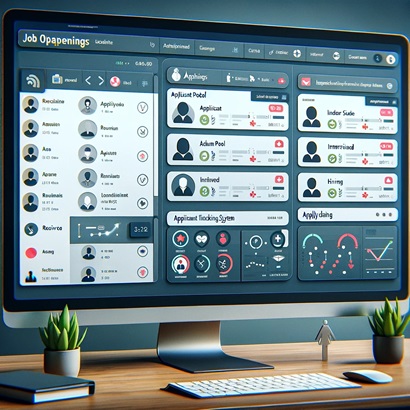
Lever ATS Resume Guide: Format, Parsing, and Ranking Tips
How Lever parses resumes, what the Gem AI scoring layer does, and exactly which formatting choices cause silent parse fa...
Read More